NASA Confirms First Full Crew Rotation on Mars Base Alpha
The Artemis-Mars program completed its first successful crew handover on the Red Planet, a milestone that shifts human spaceflight into a permanent-presence era.
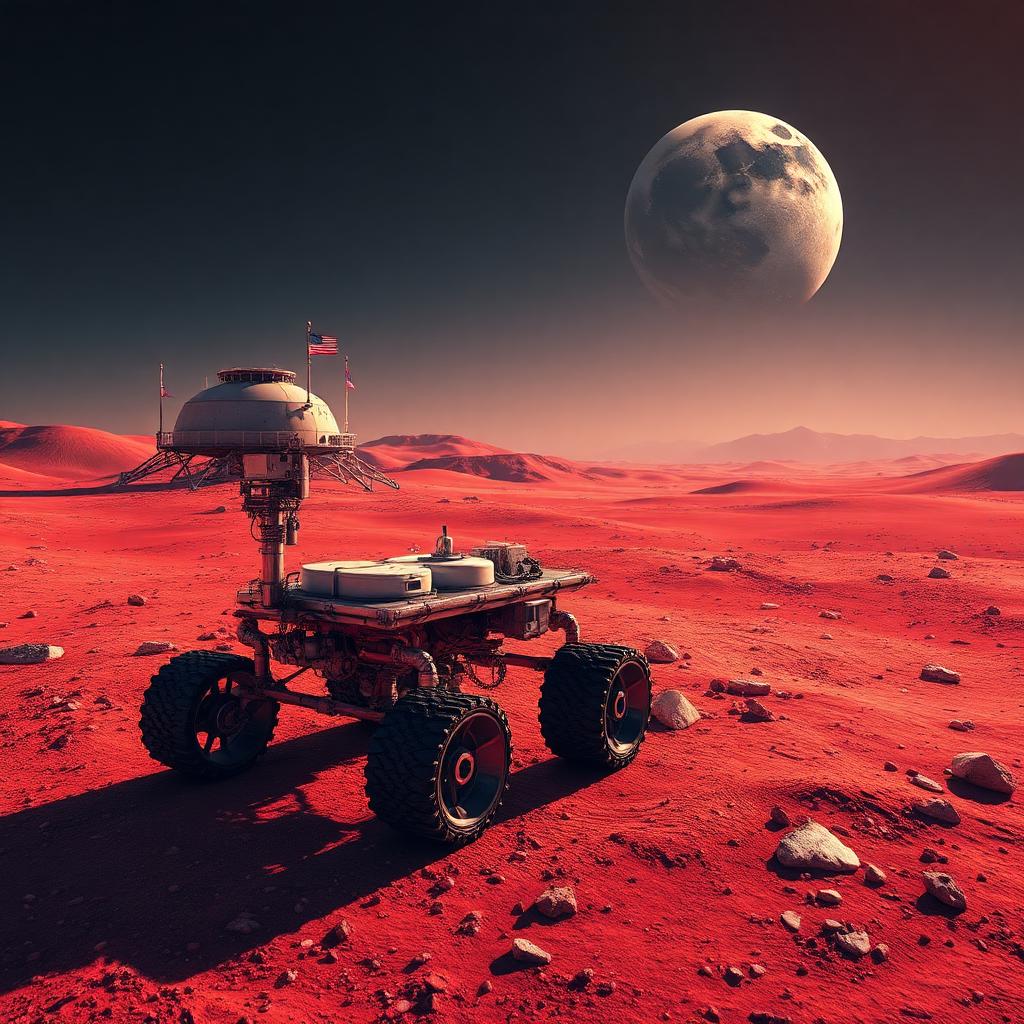
Houston — NASA and its international partners confirmed on Thursday that the first full crew rotation at Mars Base Alpha has been completed successfully. Expedition 2 landed at Jezero last Sunday and formally took command of the outpost, while Expedition 1 lifted off aboard the return vehicle Perseverance-2 and is now on a 217-day trajectory back to Earth.
The milestone marks the first time humans have handed over an off-world habitat, echoing the early days of the International Space Station but at a scale and distance without precedent. Base Alpha now houses six astronauts from the United States, Japan, Germany, the United Arab Emirates, Canada, and India.
The outgoing crew, led by Commander Reid Wiseman, spent 512 sols on the surface. Their work included the first in-situ propellant production run using MOXIE-2 technology, a 400-meter core drill through ancient lakebed strata, and the deployment of two autonomous science stations at Neretva Vallis.
Expedition 2, commanded by JAXA astronaut Naoko Yamazaki, will focus on subsurface water prospecting and long-duration life-sciences experiments. Two spacewalks are already scheduled for August to install additional solar arrays ahead of the coming dust-storm season.
NASA administrator Pam Melroy called the rotation 'the moment Mars became a place where humans live and work, not just visit.' The agency confirmed that Expedition 3 is on track for launch in late 2027, with the European Space Agency contributing its first Mars-bound crew member.
Scientifically, the program has already produced 34 peer-reviewed papers. Politically, it has created a durable partnership among a widening coalition — the Mars Cooperation Framework now includes 21 signatory nations — and served as a rare stabilizing venue during a tense year in geopolitics.
Related Stories
Fusion Startup Claims Record Net-Energy Milestone
A private fusion venture says its latest reactor test produced more energy than it consumed for a sustained burn, a key threshold on the road to clean power.
July 9, 2026
Astronomers detect a distant world that could hold liquid water
A newly discovered exoplanet sits within its star's habitable zone, reigniting the search for life beyond Earth.
July 8, 2026
Astronomers Detect Signs of a Hidden Planet Beyond Neptune
New gravitational data revives the search for a distant world at the edge of the solar system.
July 7, 2026